For a dyslexic reader, the cognitive struggle with printed text is not an intellectual limitation; it is a phonological decoding bottleneck.
When a student or adult with dyslexia spends 80% of their working memory sounding out syllables, untangling letter reversals, and tracking words line by line, little mental bandwidth remains for semantic comprehension, contextual inference, and critical analysis. The inevitable result is reading anxiety, academic exhaustion, and avoidance.
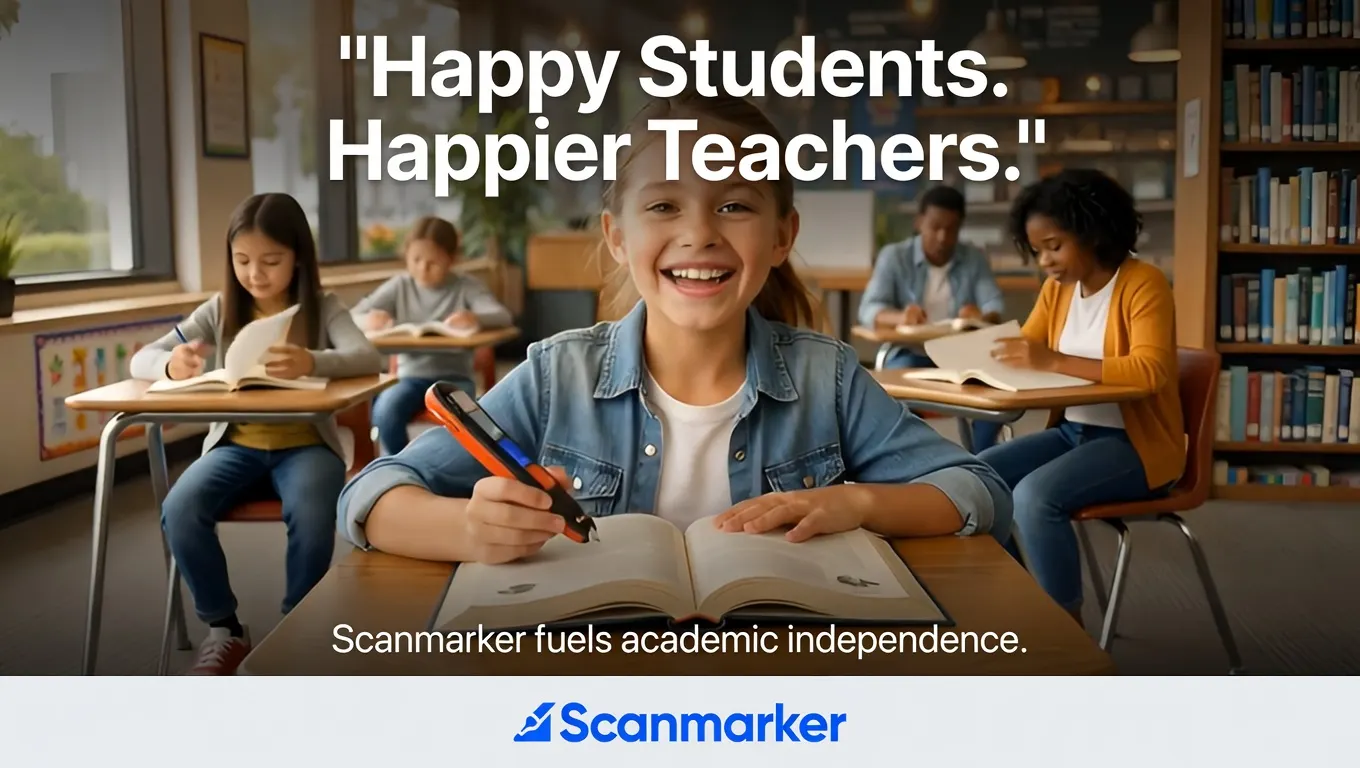
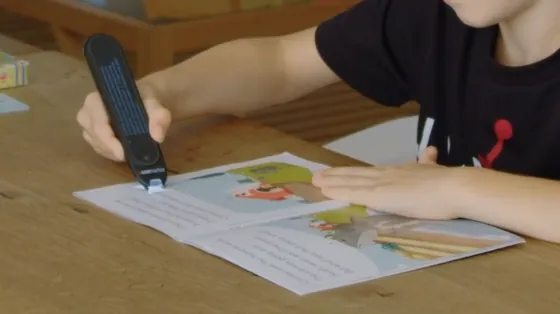
An assistive reading pen bridges this gap. By passing the optical tip across a printed line, the device instantly digitizes the text via optical character recognition (OCR) and reads it aloud through a built-in speaker or connected headphones—completely offline, without a computer, tablet, or smartphone.
To determine the best options in 2026, our clinical and educational assistive technology team evaluated the leading models on the market. Below is our definitive ranking based on audio naturalness, decoding independence, exam compliance, and educational accommodation fit.
The 2026 Dyslexia Reading Pen Scorecard & Rankings
| Rank | Model | Price | Display & Interface | Phonics / Literacy Modules | Exam-Lock Mode? | Primary Target User |
|---|---|---|---|---|---|---|
| #1 | Scanmarker Max Bundle | $319 | 2.4" Color Touchscreen | Yes (Phonics cards + TTS) | Yes (PIN-secured) | K–12 students with IEP/504 plans needing structured literacy support |
| #2 | Scanmarker Max | $299 | 2.4" Color Touchscreen | Word breakdown & dictionary | Yes (PIN-secured) | Middle school, high school, university learners & adults with dyslexia |
| #3 | C-Pen Reader 2 | ~$299 | Monochrome OLED | Cambridge Dictionary | No (Classroom study only) | Well-established classroom reading companion for homework & revision |
| #4 | Scanmarker PAL | $179 | 1.9" High-Contrast LCD | Direct synthetic read-aloud | Screen-free simplicity | Elementary students (Grades 2–5) wanting zero digital distractions |
| #5 | C-Pen Exam Reader 2 | ~$299 | Monochrome OLED | None (Pure TTS only) | Permanently locked | Standardized test accommodation (JCQ, SAT, ACT approved) |
Detailed Model Evaluations: Why Each Model Ranked Where It Did
#1 Rank: Scanmarker Max Bundle ($319) — The Best for Structured Literacy & IEPs
The Scanmarker Max Bundle earns our top ranking because it solves the fundamental pedagogical debate in assistive reading technology: accommodation vs. remediation.
While ordinary text-to-speech tools provide immediate access (accommodation), they do not necessarily improve a child's underlying phonological decoding skills (remediation). The Max Bundle addresses both:
- Immediate Reading Accommodation: The Scanmarker Max pen reads any printed textbook or worksheet aloud in clear, natural synthesized speech at user-adjustable speeds.
- Structured Literacy Phonics Module: Bundled with specialized interactive phonics cards, the pen breaks printed words into individual phonemes and syllables, reinforcing Orton-Gillingham-style phonetic decoding.
- PIN-Protected Exam-Lock: Educational coordinators and test proctors can enter an administrative PIN to lock out dictionaries and translation, leaving only text-to-speech active during exams.
Clinical Verdict: The premier choice for parents and school districts implementing structured literacy goals within an Individualized Education Program (IEP) or Section 504 plan.
#2 Rank: Scanmarker Max ($299) — The Best Standalone Tool for Teens & Adults
For high school students, college undergraduates, and working professionals with dyslexia who do not require physical phonics cards, the standalone Scanmarker Max is the most versatile device available.
- Vibrant 2.4-Inch Color Touchscreen: Highlights words on-screen synchronously as they are spoken, providing dual visual and auditory reinforcement (multisensory tracking).
- 100% Offline Autonomy: No Wi-Fi network, pairing app, or smartphone needed. It operates seamlessly in testing halls, airplane cabins, or rural classrooms.
- Built-in Dictionary & 30 Offline Languages: Instant definition lookups expand vocabulary, while offline translation supports English Language Learners (ELL) with dyslexia.
Clinical Verdict: The gold standard for secondary, post-secondary, and adult reading independence.
#3 Rank: C-Pen Reader 2 (~$299) — The Established Classroom Classic
The C-Pen Reader 2 is one of the most widely deployed assistive reading tools across UK and US special education departments.
- Integrated Cambridge Dictionary: Allows students to look up definitions instantly on its monochrome screen.
- Voice Memo Recording: Students can record verbal notes, reminders, and class instructions.
- Limitations: Its monochrome interface feels dated compared to modern color touchscreens, and because it contains storage and dictionaries, it cannot be used in formal proctored examinations without a dedicated exam counterpart.
Clinical Verdict: A proven, dependable workhorse for everyday classroom and home study.
#4 Rank: Scanmarker PAL ($179) — The Best Friction-Free Entry for Younger Readers
Many elementary students (ages 7 to 10) find multi-tiered menus, touchscreens, and digital settings confusing or distracting. The Scanmarker PAL strips away every unnecessary complication.
- Instant One-Touch Operation: Turn on the pen, touch the tip to a book line, and listen. No menus, no setup, and no apps.
- High-Contrast 1.9-Inch Display: Clean, large typography designed specifically for developing readers and children with visual tracking challenges.
- Accessible Price Point: At $179, it provides an affordable entry point for families seeking immediate reading relief without committing to an enterprise price tag.
Clinical Verdict: Best for elementary learners (Grades 2 to 5) who need pure decoding support without digital overload.
4 Crucial Features to Look for in a Dyslexia Reading Pen
When selecting an assistive reading device for yourself or your child, prioritize these four clinical criteria:
1. 100% Standalone (No Phone Barrier)
   └─ Bypasses phone notifications, camera alignment struggles, and school phone bans.

2. Multisensory Tracking (Simultaneous Audio + Visual)
   └─ Dual-channel sensory input reinforces phonetic mapping in the dyslexic brain.

3. Discreet Audio (3.5mm Earbuds or Bluetooth)
   └─ Eliminates social embarrassment and classroom stigma.

4. Certified Exam Compliance (Exam-Lock Mode)
   └─ Allows the pen to be utilized on formal tests under IEP/504 regulations.
1. Standalone Immediacy (Skip the Smartphone)
Devices requiring a paired smartphone or tablet fail in real-world educational settings. Schools strictly ban phones in classrooms; furthermore, having to unlock a phone, open an app, align a camera, and crop margins creates cognitive friction that discourages struggling readers from using the accommodation. A standalone pen reads the instant it touches the paper.
2. Dual-Channel Multisensory Reinforcement
Neurological research into the Science of Reading indicates that dyslexic brains benefit immensely from simultaneous auditory and visual input. Seeing the word on the page while simultaneously watching it highlight on the pen's screen and hearing it spoken aloud creates strong neurological connections between phonemes (sounds) and graphemes (printed letters).
3. Discretion & Social Stigma
Struggling readers in middle school and high school frequently abandon assistive accommodations if the equipment makes them look conspicuously different from peers. A sleek, highlighter-sized pen paired with standard wired earbuds looks like ordinary study gear, preserving student dignity.
4. Exam Lockout vs. Dedicated Exam Models
Under Joint Council for Qualifications (JCQ) and US standardized testing accommodation rules, reading pens used in formal exams must not provide dictionary definitions, external storage, or internet translation.
- With the C-Pen lineup, schools must buy two separate devices: the Reader 2 for daily homework and the Exam Reader 2 for test day.
- With the Scanmarker Max, proctors can simply engage the PIN-protected Exam-Lock, transforming the everyday learning pen into a compliant test tool with a single tap.
Age-Appropriate Selection Guide
- Elementary School (Ages 7–10 / Grades 2–5): Choose Scanmarker PAL ($179) for simple, distraction-free reading, or Scanmarker Max Bundle ($319) if structured phonics practice is needed.
- Middle & High School (Ages 11–18 / Grades 6–12): Choose Scanmarker Max ($299) for touchscreen multisensory tracking, dictionary lookups, and certified testing accommodation.
- College Students & Adults: Choose Scanmarker Max or C-Pen Reader 2 for independent textbook review, technical manuals, and professional workplace documents.
Frequently Asked Questions
Does my child need a formal clinical dyslexia diagnosis to use a reading pen?
No. None of these reading pens require a formal clinical or neuropsychological diagnosis. Assistive reading pens are accessible consumer tools that provide immediate reading relief whether your child is diagnosed, undergoing an evaluation, or simply struggling with word decoding and reading fluency.
Can a reading pen be included in an IEP or Section 504 accommodation plan?
Yes. Under the Individuals with Disabilities Education Act (IDEA), assistive reading pens can be explicitly listed under classroom and testing accommodations as an "assistive text-to-speech reading device." Many public school districts purchase reading pens directly via district purchase orders to fulfill mandated accommodations.
Does using a reading pen make a dyslexic student "lazy" or prevent learning?
No. Clinical research proves the opposite: reading pens relieve the intense cognitive exhaustion caused by phonetic decoding, freeing up working memory for vocabulary acquisition, inferential reasoning, and comprehension. Rather than fostering dependency, reading pens build independent reading confidence and eliminate homework battles.
Can reading pens be used during GCSE, SAT, or ACT examinations?
Yes, provided the device complies with testing board regulations. Standard pens with built-in dictionaries or file storage are prohibited. However, exam-locked pens (like Scanmarker Max in Exam-Lock Mode or the C-Pen Exam Reader 2) are approved when established as the student's normal way of working (NWoW).
Do reading pens work on handwritten worksheets or math equations?
Reading pens are engineered specifically for machine-printed typography (standard textbook fonts from 6pt to 24pt). They do not reliably read handwritten cursive notes, whiteboard markers, or complex mathematical formulas and fractions.
Can a reading pen translate words into Spanish or other languages?
Yes. The Scanmarker Max supports full offline translation across 30 languages, and up to 112 languages when connected online, making it exceptionally valuable for English Language Learners (ELL) with reading difficulties.
Reviewed by
Sarah Jenkins, M.Ed., CALTCertified Academic Language Therapist & Assistive Tech Specialist
Sarah Jenkins has over 15 years of clinical experience implementing multisensory Orton-Gillingham literacy instruction and assistive reading technology accommodations for dyslexic learners.
Tagged
- dyslexia
- comparison
- reading pens
- IEP accommodations
- assistive tech
See the full solution
Scanmarker for Dyslexia & Reading Support
Need a pen for homework tonight — or a district quote?