Dyslexia affects an estimated 1 in 5 people, making it one of the most common learning differences — and one of the most misunderstood. If you're searching for dyslexia support right now, you're probably not looking for a definition. You're looking for something that actually works: today, this week, before the next homework session turns into a fight.
This guide covers the full landscape of dyslexia support — what it means, what real support actually looks like at home and school, and which tools make the biggest measurable difference.
That scale is why dyslexia support can't be one tool or one meeting — it has to work across home, school, and the tools a reader touches every day.
What Dyslexia Support Actually Means
Dyslexia support isn't one thing. It's a combination of:
- Instructional support — structured literacy and phonics-based teaching methods (like Orton-Gillingham) that directly address how dyslexic brains process language.
- Accommodations — tools and adjustments that reduce the friction of reading and writing without changing what's being learned (extra time, audio versions of text, reading pens).
- Emotional support — validating that dyslexia is a difference in how the brain processes language, not a reflection of intelligence or effort.
- Systemic support — IEPs, 504 plans, and school-level resources that make accommodations official and consistent.
No single piece does the whole job. A phonics program without emotional support burns kids out. Assistive technology without instruction treats the symptom, not the skill gap. Real dyslexia support layers all four.
01 · Instructional
Structured literacy and phonics-based methods (like Orton-Gillingham) that address how dyslexic brains process language.
02 · Accommodations
Tools and adjustments that reduce reading and writing friction without changing what’s being learned — extra time, audio text, reading pens.
03 · Emotional
Validating that dyslexia is a difference in language processing, not a reflection of intelligence or effort.
04 · Systemic
IEPs, 504 plans, and school-level resources that make accommodations official, written down, and consistent.
No single pillar does the whole job — that's the most common reason a support plan stalls out.
The International Dyslexia Association and Understood.org are the two most reliable places to start if you want the clinical picture behind any of this — everything below is the practical layer on top of what they document.
Dyslexia Support at Home: What Actually Helps
You don't need a diagnosis to start. Here's what evidence and experienced parents point to first:
- Read aloud together, past the age you'd expect to stop. It keeps vocabulary and comprehension growing even while decoding is still catching up.
- Separate "struggling to read" from "struggling to learn." A dyslexic child who hears text instead of decoding it can absolutely keep up with grade-level content.
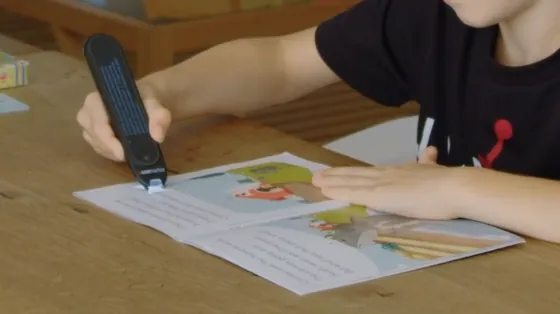
- Introduce assistive tools early, not as a last resort. A reading pen that reads text aloud on contact removes the daily friction point — homework — without waiting for a formal evaluation.
- Normalize the tool. Kids abandon accommodations that make them feel singled out. A low-key handheld device does this better than a phone app read aloud in front of classmates.
For the emotional and no-diagnosis-required side of this, our guide on helping a struggling reader at home is built specifically for parents at this exact stage — no jargon, no clinical framing, just what actually helps tonight.
Dyslexia Support at School: Getting It in Writing
Support that lives only at home disappears the moment a child walks into a classroom that doesn't know about it. Getting support written into an IEP or 504 plan is what makes it consistent.
- IEP (Individualized Education Program): for students who qualify for special education services; can specify a reading pen, extended time, and instructional method.
- 504 Plan: for students who need accommodations but not specialized instruction; typically the faster path to a documented reading pen accommodation.
- Classroom-level accommodations: even without formal paperwork, many teachers will informally allow assistive tools — ask directly.
Our IEP/504 reading accommodations guide walks through the exact language districts use, and the U.S. Department of Education's IDEA resource page is the authoritative source on eligibility. Districts increasingly fund these tools directly — our scanner pen for schools guide breaks down funding sources (IDEA Part B, Title I, state assistive technology grants) and how to request a device through procurement rather than paying out of pocket.
Dyslexia Support Tools Worth Knowing About
- Reading pens / reader pens — scan a line, hear it read aloud instantly, no phone required. See our full ranking of reading pens for dyslexia.
- Structured literacy apps — phonics-based practice tied to the same instructional method as in-person tutoring.
- Audiobooks and read-along libraries — Learning Ally and Bookshare both offer dyslexia-friendly formats.
- Dyslexia-friendly fonts and formatting — wider letter spacing and specific typefaces reduce visual crowding for some readers.
For the technical, model-by-model comparison of which specific device fits which situation — exam-lock mode, phonics module specifics, IEP language — see Scanmarker for Dyslexia & Reading Support or shop the full lineup.
Frequently Asked Questions
Do I need a diagnosis before starting dyslexia support?
No. Tools like reading pens and structured literacy practice help any struggling reader, diagnosed or not. A formal diagnosis matters mainly for accessing school-based accommodations like an IEP.
What's the single highest-impact dyslexia support tool?
For most families, a dedicated reading pen has the highest impact-to-effort ratio — it removes the daily homework friction point immediately, with no waiting period, no software, and no stigma of a phone held up in class.
Can dyslexia support fix dyslexia?
No — dyslexia is a lifelong difference in language processing, not something to be cured. Support changes outcomes, not the underlying wiring. The goal is removing barriers, not eliminating the difference.
At what age should dyslexia support start?
As early as signs appear — often kindergarten or first grade. Early support prevents the compounding frustration and avoidance that makes later intervention harder.
Next: see our full reading pen ranking for dyslexia or explore dyslexia support built for the classroom.
Tagged
- dyslexia
- IEP/504
- buyer's guide
- parents
See the full solution
Scanmarker for Dyslexia & Reading Support
Need a pen for homework tonight — or a district quote?